
Posted on 02 March 2017 - 08:43 AM
AlbertEinstein wrote
NaomiBliss wrote...
Nessie
What if the fight was out of water and everyone was bloodlusted?
Posted on 02 March 2017 - 09:55 AM
NaomiBliss wrote
AlbertEinstein wrote...
What if the fight was out of water and everyone was bloodlusted?
Run to river/mush and bring a bow.
Posted on 02 March 2017 - 09:59 AM
LordBowser wrote
NaomiBliss wrote...
Run to river/mush and bring a bow.
No that's not allowed because we have established Nessie would definitely have the advantage in a water battle
Posted on 02 March 2017 - 09:16 PM
NaomiBliss wrote
LordBowser wrote...
No that's not allowed because we have established Nessie would definitely have the advantage in a water battle
Are you complaining about fairness? Who are you? The average PVPer who complains about simple 2v1s?
Last edited on 03 March 2017 - 11:43 AM by *deleted-49709
Automatically DeletedPosted on 04 March 2017 - 04:29 PM

halp
and by "minimum" do they mean the vertex?
Last edited on 04 March 2017 - 05:03 PM by AlbertEinstein
Unshift wrote
halp
and by "minimum" do they mean the vertex?
1.) There are two ways of going about this. Every quadratic polynomial can be factored into a product of binomials (over complex numbers as a whole).
So let's say you have two roots a and b. Then f(x) = m(x-a)(x-b) = x^2 -ax -bx + ab = mx^2 -m(a+b)+ mab.
Then we have a simple way of writing the sum of the roots: -(-m(a+b))/m = a+b, and the product of the roots is mab/m = ab.
So for any quadratic polynomial of the form ax^2 + bx +c, we automatically know the sum of the roots: -b/a, and similarly, the product of the roots c/a.
Back to your problem, we have f(x) = x^2 -2kx + 55. Let's use the product and sum of roots method.
Let's try the product: (k+3)(k-3) = 55/1 —> k^2 - 9 = 55 —> k^2 = 64, so k = +8 or -8.
The statement of the problem specifically says "positive integer k," so we take k = 8.
Let's check: f(x) = x^2 - 16x + 55 = (x-11)(x-5), which works out.
2.) Yes, by minimum, they mean vertex. Quadratic equations either have a minimum or a maximum.
If it's a minimum, then we know the parabola has to point up, and if it's a maximum, we know it has to point down.
Thus, this parabola will point up and will have a positive sign on the x^2 term.
Do you remember the equation for the x value of the vertex? I believe it's x = -b/2a for f(x) = ax^2 + bx + c.
Then, we know that x = -6 = -b/2a, so b = 12a.
But remember the sum of roots method? -b/a = sum of roots, and we already know one of them.
From above, we know that -b/a = -12 = r - 17, where r is the unknown root. Thus, the other root is r = 5.
Let's check: f(x) = (x-5)(x+17) = x^2 + 12x - 85, which works out with what we found since -b/2a = -12/2 = -6. But we run into a problem with f(-6) = (-6-5)(-6+17) = (-11)(11) = -121. Thus, we multiply the function by 14/121 to get the result:
f(x) = (14/121)(x-5)(x+17) (multiplying by a constant doesn't change the value of -b/2a since we multiply top and bottom by 14/121, which cancels out).
Posted on 05 March 2017 - 06:16 PM
how do I do problems like these lolExpress as a square root of some expression
a^4, a^18, a^2b^8
and like the answer is like the square root of something
Posted on 05 March 2017 - 06:30 PM
What is 4.123445677890 x 93810376 ???? ( DONT USE THE CALCULATOR)Posted on 05 March 2017 - 07:23 PM
Automatically DeletedPosted on 05 March 2017 - 07:26 PM
SporkHandles wrote
Express as a square root of some expression
a^4, a^18, a^2b^8
and like the answer is like the square root of something
I think, if I understand correctly.
1. a^4 = sqrt(a^8)
2. a^18 = sqrt(a^36)
3. a^2b^8 = sqrt(a^4b^16)
Posted on 05 March 2017 - 10:50 PM
Two trains, Train A and Train B, simultaneously depart Station A and Station B. Station A and Station B are 252.5 miles apart from each other. Train A is moving at 124.7mph towards Station B, and Train B is moving at 253.5mph towards station A. If both trains departed at 10:00AM and it is now 10:08, how much longer until both trains pass each other?A - 31.054 minutes
B - 32.049 minutes
C - 16.232 minutes
D - 32.058 minutes
Posted on 05 March 2017 - 11:41 PM
_TrumpCare_ wrote
You got me!
Last edited on 05 March 2017 - 11:53 PM by AlbertEinstein
NaomiBliss wrote
A - 31.054 minutes
B - 32.049 minutes
C - 16.232 minutes
D - 32.058 minutes
Call velocity of train A vA and velocity of train B vB.
Then, their locations at time t, respectively, are rA(t) = vA*t and rB(t) = Q - vB*t, where Q = 252.5 miles.
They meet each other when rA(t) = rB(t). Hence, vA*t = Q - vB*t; (vA + vB)*t = Q; t = Q/(vA + vB).
This numerically is t = (252.5 mi)/(124.7 mph + 253.5 mph) = 0.667636 hr * (60 min/1hr) = 40.058 min.
Then, after eight minutes, there are (40.058 - 8.00000) min = 32.058 min are left.
Thus, the answer is D.
Posted on 05 March 2017 - 11:54 PM
SporkHandles wrote
Express as a square root of some expression
a^4, a^18, a^2b^8
and like the answer is like the square root of something
I endorse Combo Boy's answer.
Posted on 06 March 2017 - 11:25 PM
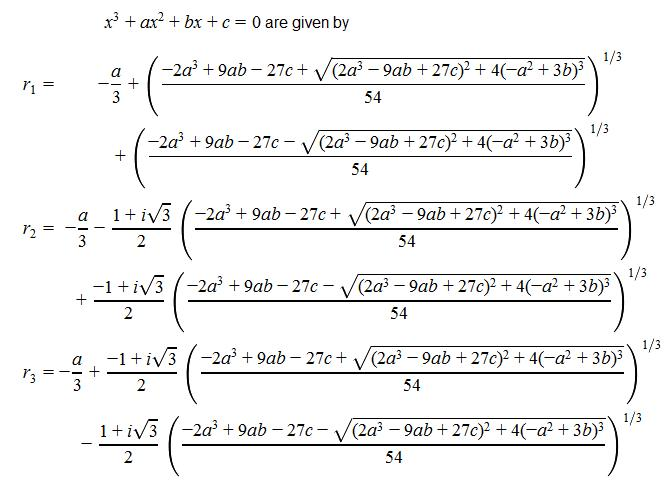
help pls
Posted on 07 March 2017 - 09:46 AM
RoadtoDiamond wrote
help pls
Here's your homework:
Show that those values r1, r2, and r3 satisfy the equation above for x.
I'm pretty sure you're showing me the cubic formula, so they should satisfy it.
Last edited on 09 March 2017 - 08:41 PM by ThatOneCombo
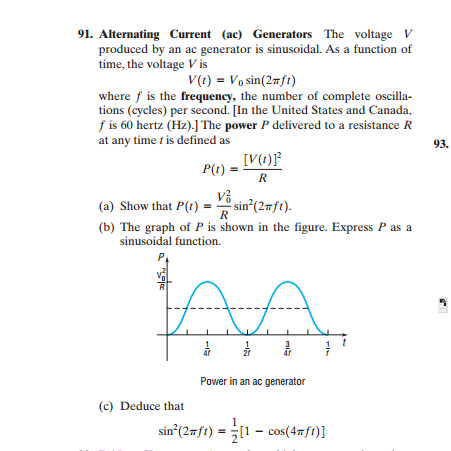
nvm got it
Posted on 13 March 2017 - 11:24 PM
ThatOneCombo wrote
nvm got it
a.) Substitute it in.
b.) See c.)
c.) Use one of the cosine double angle formulas.
Posted on 15 March 2017 - 12:37 AM
I need to learn how to do multiplication.